Your week runs on settings you never chose. Answering Slack at 9 pm is one of them.
Here's how to change your week without changing jobs.
It's 5:29 pm.
You close the laptop.
And somehow, you're still at work.
If that's you, keep reading. On this page you'll discover:
- The one thing to change before your next vacation, so the rest actually lasts.
- The 2 pm leak that makes 9 pm feel like laziness. It isn't.
- Why Atomic Habits didn't stick for you. Hint: it was never a discipline problem.
- The one calendar change that survives a bad week. Most don't.
- Why ChatGPT feels so helpful at 2 am, and changes nothing by Friday.
- Who this is NOT for, and who to see instead. (Read this part. I mean it.)
Let me guess how your evenings go.
You drive home or catch the train. You get to the driveway and can't remember the drive, or the train ride.
You had plans. Gym. Cook a proper dinner. Call your mum. Read 20 pages.
Instead you collapse on the couch "for 5 minutes."
Now it's 10:44 pm. Your thumb is still scrolling. You feel worse than when you sat down.
You go to bed. At 3 am you're wide awake, brain already running tomorrow's meeting.
The weekend isn't much better. Saturday is recovery. By Sunday afternoon the dread kicks in. Some weeks it starts on Friday.
The people you love get what's left over after work. Some days they get less than that.
And the worst part?You don't think you're allowed to complain.
Good job. Good pay. People would kill for your problems. It feels like the most first-world problem there is.
So you say nothing. You keep delivering. You keep hustling. Day after day, month after month.
You get very good at faking fine.
Here's the thing nobody says out loud. "First world problem" is exactly how this hides. It isn't a small problem. It's a slow one.
But you know something's off. You used to be sharp. You used to enjoy this. Now you're just... spent. Quietly cracking, week after week.
You've tried to fix this.
And you're not someone who ignores a problem.
- You read the books.
- Atomic Habits. Deep Work. Essentialism. Great ideas. None of them told you HOW to make it work in a week you don't control. Your meetings aren't yours. Your inbox isn't yours.
- You tried the apps.
- Meditation apps. Screen-time blockers. Habit trackers. They work for about 9 days. Then you're back.
- You tried a new system.
- Notion. Time-blocking. A morning routine. It took a whole weekend to set up and it was dead in 2 weeks. When you're this tired, the last thing you need is another system to maintain.
- You took leave.
- It helped. For about 3 days after you got back.
- You thought about quitting.
- Some people do, and it works for them. But you have a mortgage, a family and a career you actually built. And here's what nobody tells you: plenty of people quit, and the exhaustion comes with them. Same habits. New logo.
- You've used ChatGPT as a 2 am coach.
- It's a great listener. But every chat starts from zero. It forgets you by Tuesday. Nothing builds.
- Maybe you've seen a psychologist, or you're on a waitlist.
- Good. Keep going. That matters. This isn't a replacement. It's the method for the 167 hours a week you're not in that room.
Notice what every one of these has in common. A book adds ideas. An app adds notifications. A new system adds upkeep. Leave adds a week off, then hands you back the same life.
They all add.None of them change what you do.
None of these failed because you're weak.
They failed because every one of them asked for the one thing you've run out of: effort.
Your week is still on factory settings.
When you got your last phone, how many settings did you change?
If you're like most people, almost none.
Out of the box, every app can ping you. Every notification is on. Every red badge is lit.
So the phone runs your day. And then you wonder why you can't put it down.
You never chose that. It came that way. Factory settings.
Your working week runs the same way.
- Answer Slack at 9 pmNobody told you to
- Back-to-back meetings, 5 days a weekNobody told you to
- Build the deck on Sunday afternoonNobody told you to
- Lunch happens at your deskNobody told you to
It just happened. One small yes at a time. And nobody, including you, ever went back to check the settings. Or stopped to question it.
That's not a character flaw. Factory settings are built NOT to be noticed. Your job set them, and they run every waking hour, whether you notice them or not.
Here's why that matters. Every setting you never chose costs you energy. A little, every hour, in the background.
Try this tonight. Don't change anything. Just count every time you check Teams or Slack after you leave work. Then ask yourself one question: when did I decide to do that?
By 9 pm, you've paid for hundreds of choices you never actually made.
That's why willpower doesn't work. You can't out-discipline something that runs in the background all day.
It's also why a week off didn't help. You rested, then came back to the same factory settings. The same burning building, still on fire. By Wednesday, a week off evaporated as if it never happened.
So you're not tired from the work itself. You're tired from the settings wrapped around it. Which means: change the settings, and the same job costs you less.
And it works both ways. Change one setting and it works FOR you every single day. Without effort. Without you even thinking about it.
You don't need more discipline.You need fewer decisions.
That's what The Refactor does. First it maps your body: when your energy actually peaks and crashes. Then it takes you through your settings, one by one: your calendar, your meetings, your evenings, your always-on habits, your decisions. You see every factory setting you never chose. Then you decide which ones stay. So the right thing happens on a bad week, not just a good one.
And here's the part people don't expect. Most of the work is turning things off. You're not adding a new system to maintain. You're removing the ones you never chose.
“I had a moment going through the programme. I realised I designed a life that served everyone except me, and I never questioned it. It was a profound moment that completely changed how I see things.”
A few weeks from now
Picture a Tuesday.
5:29 pm. You close the laptop, and this time the day actually ends.
Your phone goes on the charger in the hallway. You cook. Someone tells you about their day, and you're present, listening.
At 9 pm you're reading, not scrolling. At 3 am you're asleep.
Nothing heroic happened. You changed a handful of settings.
Here's how you get there.
The Refactor is 7 self-paced modules. Short evenings, not a lost weekend. You finish with 9 documents built from your answers: your energy map, a calendar that protects your best hours, and a plan for when a bad week hits.
US$297 once. It runs in Claude Pro, about US$20 a month. Give it 30 days. If your evenings don't feel different, one email gets every cent back.
It won't happen all at once. Here's how it goes.
This won't make your job easy. It won't fix a bad boss. It makes the same job cost you less.
This week. Three short evenings. Your energy goes on one page: when it peaks, when it crashes, and what's been draining it. For the first time, the tiredness makes sense. You're not lazy. You're not imagining it. It was never a discipline problem.
Next week. You find the 3 settings costing you the most, and you change the first one. Maybe it's Teams on your phone. Maybe it's the meeting using your best hours when your brain should be doing deep work. Small. Almost boring. That evening, you notice something's left. Not a lot. But something.
Week 3. Your best hours go back to your best work. In the 10 am meeting where you used to nod along, you're the one who spots the problem first. You used to be sharp. Turns out you still are.
And your workday has an ending now. You close the laptop and your brain gets the message: done. You're home when you're home.
Week 6. Saturday is for living again, not recovering. Sunday afternoon comes, and the dread doesn't. You take a day off without the guilt.
And the big question you've been circling for months, stay or go, you can finally think about clearly. Because you're not deciding on empty anymore.
A year from now. You've had bad weeks. Of course you have. A reorg. A launch. A sick kid. But a bad week stayed a bad week. You caught the drift and restarted in 15 minutes, not 3 months.
You're still delivering. Just not at your own expense.
Other people notice first.
Someone at home says it before you do: "You seem different." You're at the table, not just near it.
The people you love get the first version of you, not what's left.
At work, someone asks what changed. You're clearer in meetings. Calmer when things go sideways. Out the door at 5:30, and nothing fell over. You don't have to tell them how. But you could.
And then you notice it too. The quiet thing. You feel like yourself again. The one who had it handled.
You didn't try harder. You stopped paying for settings you never chose.
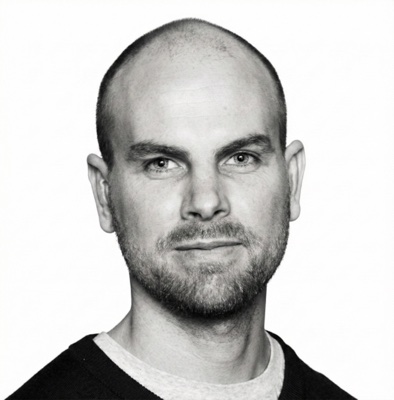
Who am I to tell you this?
I'm Dihan. I've spent 20+ years leading tech teams.
I'm not a life coach. I still have the day job, the meetings and the Slack notifications.
I've watched brilliant people on my teams go quiet. Stop laughing in meetings. Keep hitting every target while something inside them went out.
This happened to me too.
The Refactor is what I wish I could've handed each of them, and myself.
What you'll build
The Refactor isn't a course you watch. Every module ends with a document about your life, built from your inputs, that you keep.
- Module 0
Biological Blueprint
From "why am I like this at 3 pm?" to knowing exactly when your energy peaks and crashes, and why it isn't laziness.
- Module 1
Baseline Audit
From everything feeling like the problem to the 3 leaks to fix first. And no more big decisions made on empty.
- Module 2
Philosophy Framework
From your worth equals your output to: still good at your job. It's just not all you are.
- Module 3
Default Calendar
From your sharpest hours going to other people's meetings to a week that protects them, and survives a bad day.
- Module 4
Input Scorecard and Rituals
From laptop shut, brain on, thumb scrolling to a workday with an ending. Home when you're home.
- Module 5
Recovery Plan
From Saturdays spent recovering to weekends for living, and rest without the guilt.
- Module 6
Maintenance Protocol
From one bad week undoing everything to a bad week that stays a bad week. Back on track in 15 minutes.
- Why it isn't ChatGPT
Here's what makes it different from ChatGPT: it remembers. 28 prompts, each building on the last. Your answers in Module 0 shape Module 3. You end up with documents that know your life, not a chat window that forgets it. Everything is based on YOUR life because everyone is unique, with different lives and constraints.
- Format
- 7 self-paced modules, 4 to 6 hours of video
- You keep
- 9 documents built from your answers
- You'll need
- Claude Pro, about US$20 a month
- Risk
- 30 days, one email, every cent back
Example documents from the course
Biological Blueprint
Chronotype Profile
Natural energy peak: 9:30 am - 12:00 pm. Natural energy trough: 2:30 pm - 4:00 pm.
Current calendar alignment: fighting biology. Your deepest focus window (9:30-12) is consumed by back-to-back stakeholder meetings. Your trough (2:30-4) is when you attempt your most complex product specs.
Sleep Profile
Biggest environmental factor: screens in the bedroom (laptop and phone both charge on the bedside table).
Top 3 environmental changes (no willpower required):
- Move phone and laptop chargers to the kitchen tonight
- Get a cheap alarm clock so the phone isn't the alarm
- Set bedroom temperature to 18 degrees (currently 21)
Start Here: Your Highest-Leverage Change
Sleep environment redesign. Sleep is the multiplier. Your 6.5-hour average with poor quality indicators is compounding every other problem: the 3 pm crash, the flattened cortisol curve, the depleted decision-making after 9 pm when you're trying to do deep work.
Your Baseline Audit
System Map Summary
26 significant items mapped across energy, decisions, commitments, environment, and relationships. 19 of 26 (73%) are inherited defaults, accumulated through organisational culture, habit, or other people's decisions rather than deliberate design.
The most significant feedback loop runs from meetings owning your peak → deep work pushed to your trough → unfinished work spilling into evenings → screens destroying wind-down → poor sleep → degraded next-day capacity.
Live Wire 1: Back-to-back meetings owning your 9:30 am-12 pm peak window
Monday through Wednesday, stakeholder reviews, sprint planning, product strategy, and 1:1s consume your entire biological peak. Last week you got 90 minutes of focused work during your peak out of a possible 12.5 hours.
Leverage: changing this directly improves deep work quality, evening availability, sleep onset, and your capacity to process the career decision clearly. Highest-leverage single item on your map.
Your Philosophy Framework
Your Control Radius
Within your control: 5 items
- Evening laptop boundary: environment is redesignable, no structural changes attempted
- Sleep environment: Blueprint gave 3 zero-willpower changes, none yet implemented
- Meeting wall reclaim: blocking two peak mornings, untested
Outside your control: 3 items
- The reorg: VP's decision, no timeline, no input mechanism
Reclassified: 3 items
- Fitness: spent months treating missed runs as a motivation failure, when the strategy (5:30 am alarm, Bear chronotype, unpredictable toddler) was structurally designed to fail. Reclassified: not a willpower problem, a scheduling design problem. Budget released from self-blame.
Your Default Calendar
Operating principles
- "My evenings belong to my family. The system protects this, not my willpower."
- "Deep work is scheduled before 11 am. Meetings do not own my peak window."
- "If it requires me to be at my best to work, it's not designed yet."
Weekday schedule
| Time | Mon | Tue | Wed (WFH) | Thu |
|---|---|---|---|---|
| 8:15 | Email batch 1 | Email batch 1 | Email batch 1 | Email batch 1 |
| 8:30 | Deep work | Deep work | Deep work | Deep work |
| 10:00 | Team standup | Deep work | Deep work | Deep work |
| 12:30 | Lunch, away from desk | Lunch, away from desk | Lunch + walk | Lunch, away from desk |
| 2:30 | NSDR + walk | NSDR + walk | NSDR + walk | Product review |
| 4:45 | Leave → pickup | Wrap-up | Wrap-up → pickup | Wrap-up |
Your Input Scorecard
Binary, not subjective
The Scorecard replaces "how did today feel?" with "did I do the things I designed?" You quit meditation because it didn't make you feel calmer. Both times you were measuring an outcome, not an input.
The Daily Scorecard
- Did I protect the 8:30-11:00 am peak window for deep product work?
- Did I batch email and Slack to the 3 designed windows rather than monitoring continuously?
- Did the laptop go upstairs when the kids went to bed?
- Did I run the Lunch Walk? (Minimum: 5 minutes outside.)
- Did I run the Commute Book? (Phone stayed in the bag on the morning train.)
Your Recovery Plan
Invisible beats communicative
Your boundary history is definitive: every boundary that failed was communicative. "No Slack before 9 am" (one social cost moment undid it), calendar focus blocks (people booked over them). Every boundary that held is invisible or environmental: the morning run (nobody's awake), the bedroom chargers (physical), the email batching (nobody noticed).
Energy ratio
- Generating: 3 interactions, ~2.5 hours/week
- Depleting: 6 interactions, ~8-9 hours/week
Your energy isn't drained by the volume of interactions. It's drained by the dishonesty tax. Every depleting interaction requires you to suppress what you actually think.
Excerpts from the documents built for Alex, a fictional product manager we use to test the course. Yours are built from your answers.
What people say
Great level of research and lived experience
“There has been some great level of thought and research that has gone into the course. The Biological Blueprint is a living organism that is tailored to you with great detail. The use of Claude here is a great vehicle to deliver what the course creator deems useful.”
Rethinking the Everyday
“This course offered profound insights into how my body functions and how everyday habits influence my overall biology. It pushed me to pause, reflect, and critically reassess even the simplest routines I had always taken for granted. I now have a deeper appreciation of how small, consistent actions can significantly impact long-term health and well-being.”
Here's everything you get
- The Refactor: 7 self-paced modules, 25 short video lessons, 4-6 hours in total
- 28 connected prompts that turn your answers into your own documents. Almost every one ends with one thing you can do right now.
- 9 personal documents you keep and re-run whenever life changes
- Your Biological Blueprint: your 24-hour energy map, and why rest didn't fix it
- Your State Protocol: what to do at 9 pm when the plan meets a bad night
- Your Default Calendar: a week that protects your best hours and survives a bad day. It imports straight into Google, Apple or Outlook
- Your Maintenance Protocol: it spots the slide early and gets you back on track in 15 minutes
- Lifetime access and every future update, free
- Bonus: The Manager Approval Kit. A ready-made business case, so work can pay for it. (Many employers have a learning budget. Use it.)
Let's talk about what fixing this usually costs.
- An executive coach6 months
- about $12,000
- A burnout retreatAnd it wears off when you get home
- $850 to $19,000
- Six psychology sessionsAfter the waitlist
- hundreds of dollars
- Quitting
- your salary
You can have The Refactor today for
That's about US$42 a module, for documents you keep for life.
Get my evenings back. US$297 onceNo subscription. No upsell. No sales call. You pay once and you own it.
One honest note: the prompts run in Claude. If you don't already pay for Claude Pro, it's about US$20 a month. You can cancel it the day you finish. Download your documents first and they're yours for good.
The "keep it anyway" guarantee
Set up tonight. It takes about 30 minutes.
Do Module 0 over the next two evenings, about an hour each.
Give it 30 days.
If Module 0 doesn't show you exactly where your energy goes, or your evenings don't feel different within 30 days, send me one email. One line is enough. You'll get every cent back.
No forms. No questions. No hoops.
Write to billing@thestillarchitect.com within 30 days of buying. You don't even need a reason.
We confirm within 2 business days and start your refund within 5 more.
Each one is a file you can download and keep anywhere. A refund closes the course, not your work.
Who this is NOT for.
- You're in crisis, or you can't function. See your GP first.
- Your symptoms are physical: chest pain, fainting, bleeding. See your GP first.
- You want a replacement for therapy. This works alongside therapy, not instead of it.
Here's what to do now.
Click the button below. Enter your email. Your login arrives in 2 minutes.
Set up tonight. In three evenings, you'll know exactly where your energy goes.
30 minutes tonight. Your first evening back this week.
P.S. Here's what happens if you close this page. Nothing changes. Next Sunday the dread starts at 4 pm. Next vacation wears off by Wednesday. A year from now you're still delivering, still empty, and still telling yourself it's a first-world problem.
Or you spend 30 minutes tonight setting up, and by the end of the week you know exactly where your energy is going. If it doesn't help, it costs you nothing.
P.P.S. Not ready? Take the free 5-minute Energy Diagnostic first.